
The One-Sentence Rule
If a garage door starts closing and reverses back up, nine times out of ten the safety sensors near the bottom of the tracks are being blocked, misaligned, or confused. The exceptions are real, though: sometimes the door never even attempts to close, which points to something upstream of the sensors entirely—a stuck remote, a locked opener, or a dead travel limit. And sometimes a door that reverses isn't a sensor problem at all, it's a mechanical one hiding behind a sensor symptom. The fix depends on which situation you're actually in, so it's worth working through the list in the order a technician would.
Symptom: Door Closes Partway, Then Reverses
This is the classic call. The door comes down a foot or two, sometimes all the way to the concrete, then jerks back up on its own. Here's the check order.
1. Photo-Eye Sensors
These are the two small boxes mounted a few inches off the ground on either side of the track, aimed at each other. If anything breaks that beam—a box, a bike tire, a leaf blown in during an afternoon downpour—the opener assumes something is in the door's path and reverses it as a safety measure. Check for:
- Misalignment. One sensor's LED should glow solid; if it's blinking or off, the beam isn't connecting. Humidity and daily thermal swings can loosen the mounting brackets over months, nudging the sensors out of true alignment by just enough to break the beam intermittently.
- Dirty or fogged lenses. South Florida's humidity means condensation on the lens is common, especially on the first cool mornings of the season. Wipe both lenses with a dry cloth.
- Direct sun. Late-afternoon sun angling straight into a receiver eye can wash out the signal. If this is the cause, the door usually reverses at the same time every day.
- Corroded wiring. Near the coast, salt air works into connector pins and wire nuts over time, creating an intermittent connection that mimics a blocked beam. This is harder to diagnose by eye and often needs a multimeter.
The fix: realign both sensors so their indicator lights are solid, clean the lenses, and reroute or replace any exposed wiring that's starting to green or crust with corrosion. If the sensors themselves have failed, replacement is inexpensive and takes a technician about 20 minutes.
2. Physical Obstruction in the Door's Path
Before assuming it's electronic, a technician checks the track and threshold for anything the door is actually hitting—sand or grit washed in after a storm, a warped weatherstrip bulging into the frame, or debris sitting in the track itself. A door that reverses at the exact same spot every single time, rather than randomly, often has a physical obstruction rather than a sensor issue.
3. Force (Sensitivity) Settings on the Opener
Every opener has an adjustment, usually two small dials or a digital menu, that sets how much resistance the door can push against before the motor assumes it's hit an obstacle and reverses. If the track has swollen slightly from humidity, or a roller has started to bind, the door needs a bit more force to close—and if the sensitivity is set too low, the opener reverses on that extra resistance even though nothing is actually blocking it. This setting also drifts out of calibration on its own over time and after power surges, which are common during storm season.
4. Track Alignment and Rollers
Wood door jambs expand in humidity and contract in drier stretches, which can nudge the vertical tracks slightly out of parallel over a year or two. A track that's even a quarter-inch off can create a tight spot the door has to push through, triggering the same force-sensor reversal described above. Rusted rollers add resistance the same way, especially on homes closer to the coast where salt air accelerates corrosion on hardware. A technician checks this with a level before touching anything electronic.
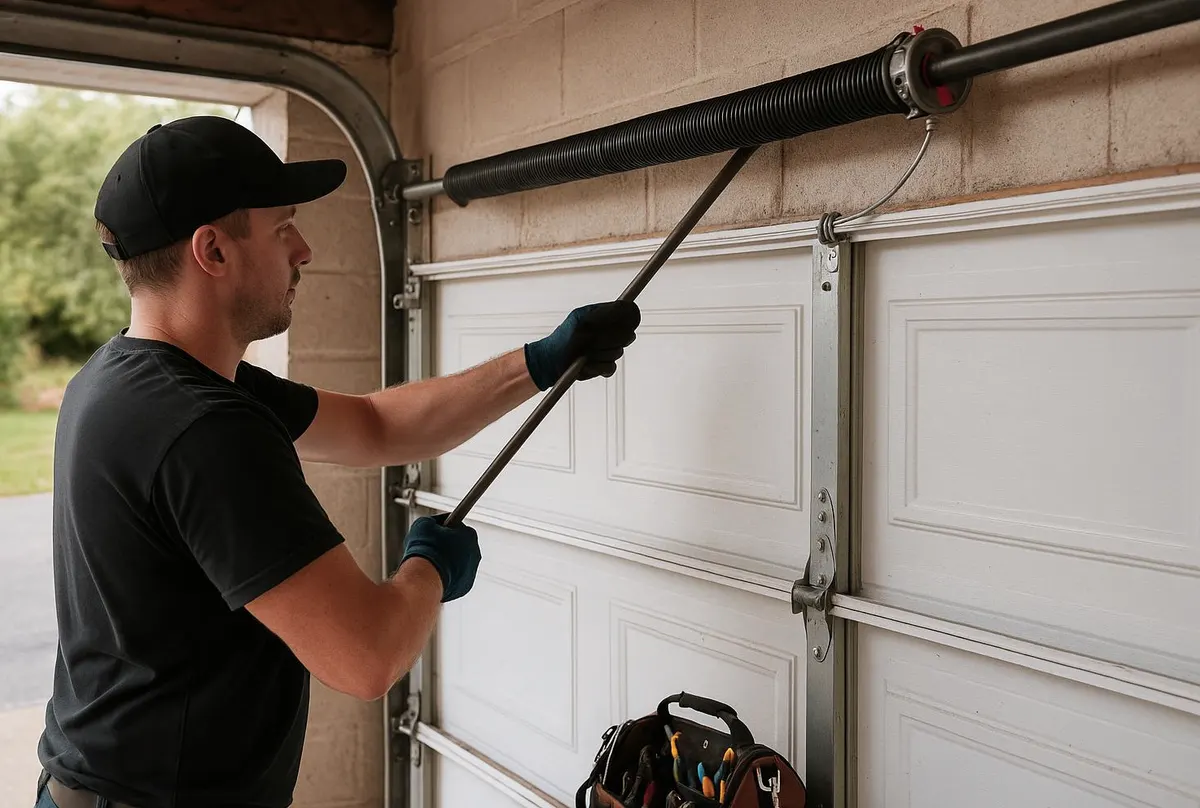
5. Spring Tension
A door with a weakening spring forces the opener to work harder to lift and lower it, which can both strain the motor and alter how the door seats at the bottom. If the spring is clearly worn—visible gaps in the coil, a door that feels heavy when lifted by hand with the opener disconnected—this gets fixed before anything else, since replacing sensors or recalibrating force settings won't help a door that's mechanically out of balance.
Symptom: Door Won't Close At All
If the door doesn't even attempt to travel down, the problem usually sits further upstream:
- Lock mode engaged. Many openers have a vacation lock or manual lock button on the wall console that disables remote closing. This is the first and fastest thing to rule out.
- Dead or weak remote batteries, or a wall button with worn-out wiring—common in older installs where the wire has been nicked or chewed.
- One sensor unplugged or fully disconnected. Most openers refuse to close at all, rather than reverse, if a sensor has no connection whatsoever rather than just a blocked beam.
- A travel limit set incorrectly, telling the opener the door is already at its closed position when it isn't.
When to Call West Palm Beach Door & Opener
If you've checked sensor alignment and the lenses are clean but the problem keeps coming back, or if the door is visibly fighting the track, it's time to get a technician on it rather than keep adjusting dials. We handle this as part of routine Garage Door Maintenance & Tune-Up calls constantly—realigning sensors, recalibrating force settings, and checking spring tension in one visit. If the issue turns out to be a bent or misaligned track, that falls under Off Track Door Repair, and we carry the parts to fix it the same day in most cases.
If your garage door in West Palm Beach, FL is reversing, refusing to close, or just acting unpredictable, call West Palm Beach Door & Opener for same-day service and an honest diagnosis before you replace parts you don't need.