
The Moment You Notice It
It's usually small. You hit the opener button on your way out and the door hesitates for half a second before it lifts. Or it opens a little crooked, one side higher than the other, and settles back level a beat later. Maybe there's a dull thud from overhead that you've never heard before, right as the door starts to move. None of it stops you from getting to work, so you let it go. But that hesitation, that lean, that thud — that's a spring telling you it's losing its fight against months of South Florida heat, humidity, and the daily strain of lifting a door that can weigh well over a hundred pounds.
Springs don't usually snap out of nowhere. They wear down first, and the signs show up weeks or months before the actual break. Here's how to check for them yourself, item by item, right in your own garage.
Walk the Checklist in Your Own Garage
Do this with the door closed and the opener disconnected if you can, or at least with the car out of the way. You're looking, listening, and lifting — not forcing anything.
1. Look at the gap in the torsion spring coils
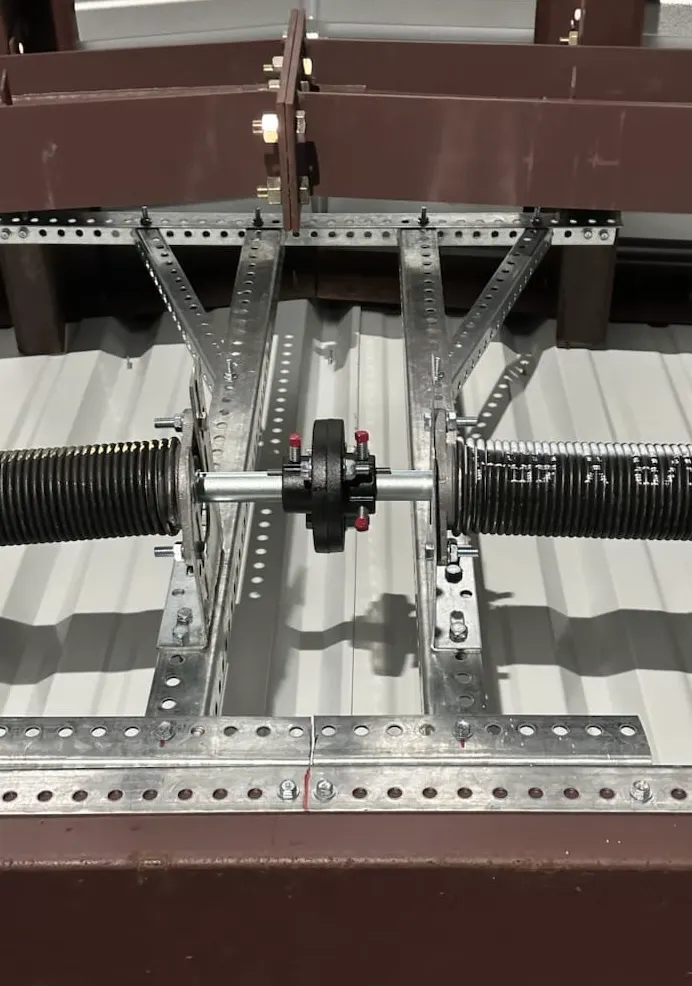
If you have a torsion spring (the kind mounted horizontally above the door on a metal shaft), look closely at the space between the coils. A spring under proper tension sits with coils close and even. If you see a visible gap, or the coils look stretched apart unevenly along the length of the spring, that's metal fatigue setting in. It means the spring has lost some of its tension and is no longer lifting its fair share of the door's weight.
2. Check whether the door opens level
Stand back and watch a full open-close cycle. A door with two torsion springs should rise evenly on both sides. If one corner lags or the door visibly tilts as it travels, one spring is doing more work than the other — a sign that one has weakened while its partner hasn't (yet).
3. Look at the lift cables for slack
With the door closed, the cables running down each side to the bottom brackets should be taut. Slack or a cable that looks loose on one side but tight on the other usually traces back to uneven spring tension, not a cable problem by itself.
4. Listen for a loud bang or pop
A spring that's about to fail will sometimes let you know with a sharp crack or bang, especially if it happens when the door isn't even moving. That sound is a strand or coil giving way under tension. Treat it as a final warning, not a one-time noise to ignore.
5. Disconnect the opener and lift by hand
Pull the manual release cord so the opener is out of the equation, then lift the door yourself about halfway. A door with healthy springs should feel roughly balanced — not light as air, but manageable, and it should stay put when you let go. If it feels like dead weight, drops on its own, or takes real effort to move, the springs are no longer carrying their share of the load.
6. Watch the opener's effort and speed
If your opener has started straining — slower open cycles, a motor that sounds like it's working harder, or a door that reverses partway up — the opener may be compensating for springs that aren't pulling their weight anymore. Chronic strain also shortens the life of the opener itself.
7. Check the spring coils for rust and pitting
Coastal salt air and the humidity that sits in an unconditioned garage both attack bare steel. Run a hand (carefully) near the coils and look for orange rust spots, flaking, or a pitted, rough texture rather than a smooth coat. Rust doesn't just sit on the surface — it eats into the metal and creates weak points where a spring is far more likely to snap, often during the sudden load of a hurricane-season storm when wind pressure adds extra stress to the door.
8. Note any seasonal timing
If the symptoms above showed up or got worse after a run of afternoon downpours, or during the peak of summer heat and humidity, that's consistent with how moisture and heat cycling accelerate spring fatigue here. A spring that's borderline in October can fail in November once temperature swings and storm-driven humidity have had another month to work on it.
What These Signs Mean Together
One item on this list might not mean much on its own — cables stretch slightly over time, openers age. But two or three of these showing up together is a pattern, not a coincidence. An uneven door, a strained opener, and visible rust on the coils is a spring that's near the end of its service life, and it's the kind of failure that tends to happen suddenly, often while the door is under load.
When to Call West Palm Beach Door & Opener
If you've gone through this checklist and found a visible gap in the coils, an unlevel door, or rust eating into the spring, don't wait for the bang. Our Garage Door Spring Repair service replaces worn torsion or extension springs with the correct size and tension for your door's weight, which matters more than people expect — the wrong spring puts the same strain right back on your opener and cables. If you're not sure what you're looking at, our Garage Door Maintenance & Tune-Up service covers a full inspection of springs, cables, and hardware so you get an honest read on what's holding up and what isn't.
If your garage door in West Palm Beach is showing any of these signs, call West Palm Beach Door & Opener for a fast, honest inspection before a worn spring turns into a Saturday emergency.