
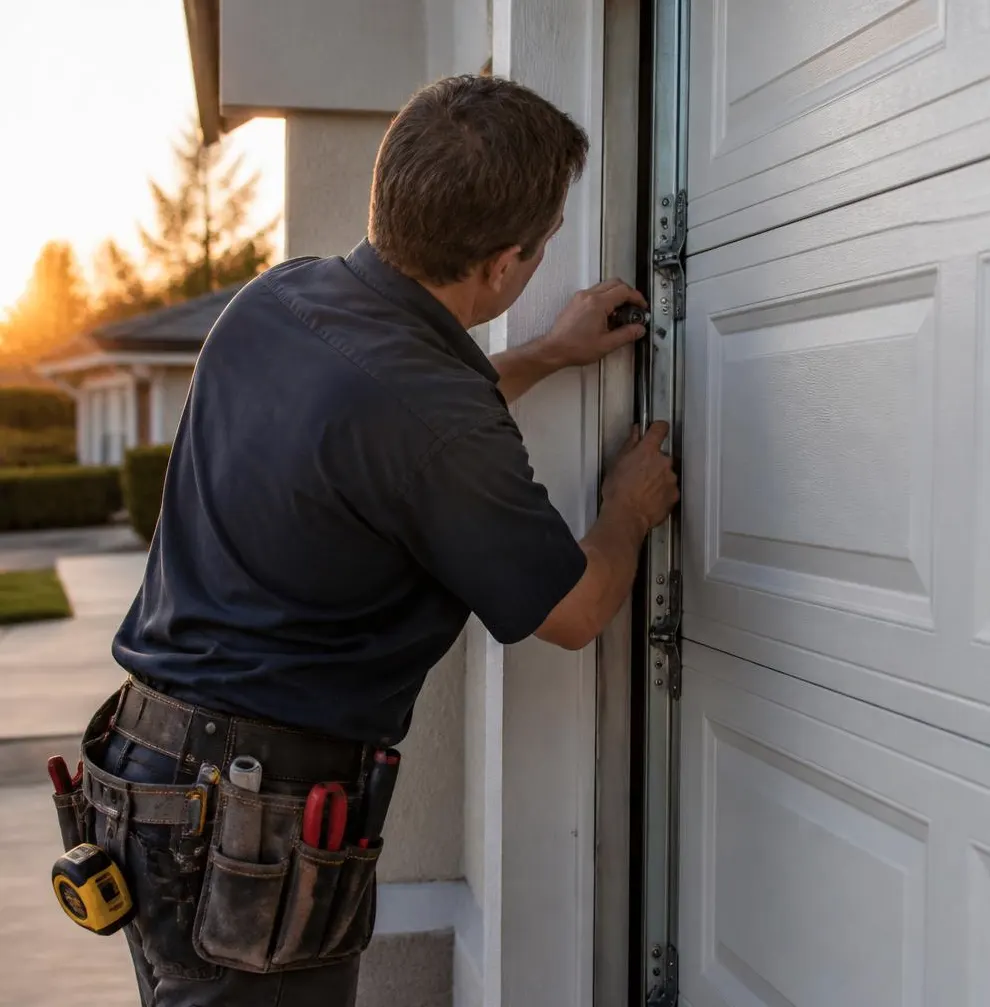
If a storm breaches your garage door, the wind doesn't stop there. It gets inside the garage, pressurizes the whole house from underneath the roof, and that pressure is what tears off roof decking and blows out windows. The short version: check your door's reinforcement, tracks, and hardware before storm season peaks, not after a watch is issued. Here's what that actually means and why it matters more here than almost anywhere else.
Why the Garage Door Fails First
Every other opening in a house — windows, doors, roof vents — is small and braced by a solid frame on four sides. A garage door is the largest opening in most homes, and it's held in place by thin metal tracks, rollers, and a handful of hinges. It's also one of the few parts of a house designed to move. That combination makes it the first thing to give way when wind-driven pressure builds up.
Once a garage door fails, wind rushes into the garage and pushes up on the ceiling from the inside. That's a very different load than a roof is built to handle from the outside. This is the entire reason wind-load rules for garage doors exist in hurricane-prone parts of Florida — the door isn't just protecting what's parked inside, it's protecting the structural integrity of the roof above it.
What Wind Does to an Unprepared Door
- Panel flex and buckling — thin, non-reinforced panels bow inward and outward with gusts until the seams crack or the panel deforms permanently.
- Track separation — repeated flexing works the rollers loose from the track, and a hard gust can pop the door off the track entirely.
- Hardware fatigue — hinges, end stiles, and the bottom bracket take the brunt of the load; in older doors these were never rated for sustained wind pressure.
- Opener strain — if the opener arm is the only thing resisting an inward push, it will bend or tear loose from the panel before the storm is over.
The Pre-Storm Checklist
This isn't a once-a-year task you can do in the dark the night before landfall. Go through it when the forecast is calm so you have time to fix what's wrong.
- Check the track alignment. Stand back and look at both vertical tracks. They should run perfectly parallel with no gaps between the rollers and the track wall. Gaps mean the track has already started to warp.
- Inspect rollers and hinges for play. Grab the bottom panel and gently rock it side to side with the door closed. Noticeable movement means worn rollers or loose hinges that will fail under load faster than you'd expect.
- Test the reinforcement struts. Many doors in this area already have horizontal struts bolted to the panels. Confirm they're still tightly fastened — vibration and years of humidity-driven expansion and contraction can back out screws over time.
- Look at the bottom seal and weatherstripping. A torn or flattened seal lets wind-driven rain in during the afternoon downpours we get even outside of named storms, and it's a sign the door isn't sealing tight under pressure either.
- Check for rust at the hinges, tracks, and bottom bracket. Salt air near the coast accelerates corrosion, and rusted hardware is weaker hardware exactly where you need strength most.
- Confirm the opener's emergency release works smoothly. If power goes out mid-storm, you want to be able to manually secure or open the door without fighting a stuck release.
Reinforcement Worth Considering
If your door predates current wind-rated standards, a few upgrade paths are worth weighing:
- Retrofit bracing kits — horizontal and vertical struts that bolt onto the inside of an existing door to add rigidity without replacing the whole unit. These typically run in the low hundreds of dollars installed, depending on door size.
- Impact-rated or wind-rated replacement doors — built with heavier gauge steel and factory-reinforced panels. This is the more durable option if your current door is older, dented, or already showing panel flex, and it's generally priced in the low-to-mid thousands depending on size and material.
- Reinforced end stiles and heavier hinges — a lower-cost middle step if the panels themselves are sound but the hardware is the weak point.
None of these matter if the track and wall anchors behind them are loose or rusted — reinforcement only works if everything it's bolted to is solid.
After the Storm: Don't Skip This
Even when a door holds up fine during a storm, the humidity and standing water afterward can cause slower damage. Wood-framed tracks swell, steel panels trap moisture against rusting spots, and torsion springs exposed to repeated wet-dry cycles lose tension faster. Walk the door again a few days after any major weather event: listen for new grinding or scraping sounds, check that it still opens and closes level, and look for fresh rust streaks at the hinges.
When to Call West Palm Beach Door & Opener
If your door is flexing visibly in wind, the tracks look misaligned, or you're not sure your current setup meets the wind-load rules for this area, that's worth a professional look before storm season forces the issue. We handle garage door maintenance and tune-ups to catch worn rollers, loose hardware, and rust before they become storm-day failures, and we also do full new garage door installation when an older door needs to be replaced with a properly wind-rated model. Either way, we'll tell you honestly whether reinforcement is enough or whether replacement makes more sense for your situation.
Don't wait for a wind warning to find out your garage door is the weak point in your home. Call West Palm Beach Door & Opener today and get it checked before the next storm rolls in.